



Wild Tulip (Tulipa sylvestris) - Historic Woodland Tulip for Naturalising
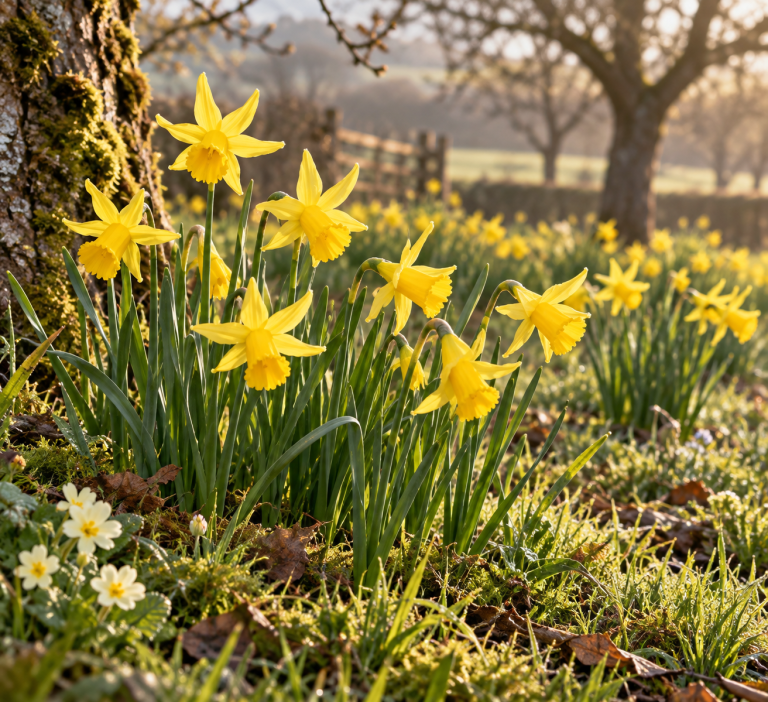
The beautiful Wild Tulip (Tulipa sylvestris) produces elegant, nodding buds that open into bright golden-yellow flowers in spring sunshine.
A centuries-old naturalised species in Britain, it is particularly lovely planted through grass, beneath deciduous trees and along woodland edges, where it can gradually establish and naturalise. Its simple, open flowers also provide accessible forage for visiting spring insects.
Joel says…
“Wild Tulips are completely different in character from the big bedding tulips. Plant them informally beneath deciduous trees or through grass, leave them undisturbed and give the foliage time to die back naturally after flowering.”
🪴 Supplied as quality bulbs ready for autumn planting. More important info below:
From £2.50
The Wild Tulip (Tulipa sylvestris) is a graceful, wonderfully natural-looking species tulip with slender stems carrying bright golden-yellow flowers, often nodding elegantly in bud before opening into beautiful star-like blooms in spring sunshine.
Unlike the large, highly bred tulips traditionally planted in formal displays, Tulipa sylvestris looks completely at home amongst grass, beneath deciduous trees, along woodland edges and through naturalistic spring planting.
It is not considered native to Britain, but it has been established here for centuries and is an ancient introduction, occurring in old gardens, parkland, woodland and grassy places.
For Wild Your Garden, that's what makes it particularly interesting: a long-established part of our flora with an informal character perfectly suited to naturalistic planting.
Wildlife value
The open flowers of Tulipa sylvestris make their pollen and nectar accessible to visiting spring insects.
We don't place Wild Tulip in the same ecological category as genuinely native woodland plants such as English Bluebell or Wood Anemone. Instead, its long history in Britain and simple, accessible flowers make it a particularly appealing naturalised addition to wildlife-friendly planting.
Use it alongside native spring flowers to help create a varied succession of flowering plants rather than as a replacement for them.
Planting & care
Position: Full sun or light/dappled shade. Particularly attractive beneath deciduous trees, where plants can receive plenty of spring light before the canopy fully develops.
Soil: Reasonably well-drained soil. Avoid permanently waterlogged ground.
Planting depth: Approximately 8-10cm deep.
Spacing: Approximately 8-10cm apart, although we prefer scattering bulbs informally and planting where they fall for a more natural effect.
Height: Approximately 25-40cm, depending on growing conditions.
Flowering: Usually April to May.
Aftercare: Allow foliage to yellow and die back naturally after flowering. This enables the bulb to replenish its reserves for the following year.
Where it is happy, Tulipa sylvestris can persist and naturalise, gradually creating increasingly informal colonies.
A tulip with centuries of British history
Although we call it the Wild Tulip, Tulipa sylvestris isn't a British native.
It is regarded as a long-established introduction and has been recorded growing beyond cultivation in Britain for centuries. Its association with old gardens, estates, parkland and woodland makes it a fascinating botanical survivor as well as an exceptionally beautiful spring bulb.
That history also separates it from many modern ornamental tulips. Plant Tulipa sylvestris somewhere it can remain undisturbed and it has the potential to become part of the garden rather than simply providing a single season's display.
SAFETY NOTE
Tulip bulbs and other plant parts should not be eaten and may cause illness if ingested. Sap can also irritate sensitive skin, so gloves are sensible when handling quantities of bulbs.
Why Wild Your Garden?
We carefully select bulbs that earn their place in a wildlife-friendly garden — prioritising native and naturalised species where ecological relationships matter most, alongside carefully chosen ornamentals that provide useful additional forage.
Orders are hand-picked for quality and packed in paper wherever suitable, with breathable net packaging used where necessary to keep bulbs in the best possible condition.
We work with specialist bulb growers and suppliers, including long-established local growers.
Additional information
| Bulb Quantity | 5 bulbs, 10 bulbs, 15 bulbs, 30 bulbs |
|---|
You May Also Like
Select options This product has multiple variants. The options may be chosen on the product page

Select options This product has multiple variants. The options may be chosen on the product page

Subscribe to our mailing list
Enter your email address to sign up to our newsletter and receive our latest offers and new releases!

© 2023 Wild Your Garden Ltd. All Rights Reserved. Registered in England and Wales. Company No. 12995106.
Opening Hours
Customer Service Team available:
Monday – Friday – 09:30-16:30
Saturday & Sunday – Closed
Bank Holidays – Closed
Our Christmas opening hours are normal opening times on all dates except Bank Holidays when we will be closed.