



Snake’s-head Fritillary (Fritillaria meleagris) - British Wildflower Bulbs for Damp Meadows & Wildlife
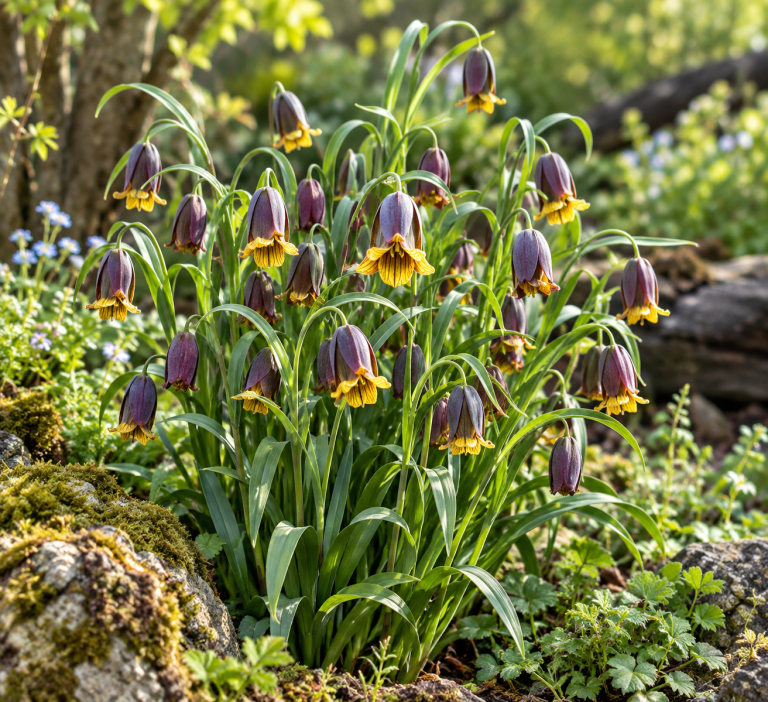
The extraordinary Snake's-head Fritillary (Fritillaria meleagris) produces nodding spring flowers intricately patterned in purple, burgundy and dusky pink.
Famous for its association with traditional British floodplain meadows, it is particularly suited to damp grassland, meadow-style planting and moisture-retentive naturalistic gardens. Its spring flowers provide accessible nectar and pollen for visiting insects, while established plants can gradually naturalise where conditions suit them.
Joel says…
“Snake's-head Fritillaries look at their best when they're allowed to appear naturally through grass. Scatter the bulbs rather than planting in rows, give them moisture-retentive ground, and let the foliage die back naturally after flowering.”
🪴 Supplied as quality bulbs ready for autumn planting. More important info below:
From £3.95
Few British wildflowers are quite as extraordinary as the Snake's-head Fritillary (Fritillaria meleagris). Its nodding, bell-shaped flowers are covered in an intricate chequerboard pattern of purple, burgundy and dusky pink - markings so distinctive they almost look painted on.
Flowering in spring on slender stems above narrow green foliage, Snake's-head Fritillaries are particularly beautiful planted through damp meadows, moisture-retentive grassland and naturalistic planting, where they can gradually establish into colonies.
This is a plant with a particularly strong association with Britain's old floodplain meadows, where spectacular populations can still produce carpets of nodding flowers in spring.
Wildlife value
The open, hanging flowers provide spring nectar and pollen for visiting insects, including bees.
More importantly for us, Snake's-head Fritillary isn't simply an ornamental bulb that happens to have accessible flowers. It is part of Britain's wild flora and belongs naturally within the sorts of damp meadow communities we should be protecting and recreating.
Plant it alongside other appropriate native meadow and damp-ground species to create a richer, more varied habitat rather than treating it simply as a spring bedding bulb.
Planting & care
Position: Full sun or light partial shade.
Soil: Moisture-retentive soil that doesn't dry out excessively in spring. Particularly suited to damp meadow conditions and heavier soils, provided they aren't permanently waterlogged.
Planting depth: Approximately 8-10cm deep.
Spacing: Approximately 8-10cm apart. For a natural appearance, scatter the bulbs loosely and plant where they fall rather than creating regimented rows.
Height: Approximately 20-30cm.
Flowering: Usually April to May.
Aftercare: Allow the foliage to yellow and die back naturally after flowering so the bulb can replenish its reserves for the following year.
Where conditions suit it, Snake's-head Fritillary can naturalise gradually, producing an increasingly beautiful spring display.
A remarkable British wildflower
The Snake's-head Fritillary has a fascinating and somewhat complicated history in Britain.
It has long been celebrated for the spectacular colonies found in traditional floodplain meadows, particularly those managed through hay cutting and seasonal flooding. Its precise historical status in Britain has been debated by botanists, however, so we prefer not to turn a complicated botanical story into a simplistic marketing claim.
What isn't in doubt is that Fritillaria meleagris is now an established and treasured part of Britain's wild flora, with surviving meadow populations of considerable conservation and cultural importance.
The botanical name meleagris is associated with the distinctive mottled or chequered appearance of the flowers - the feature that makes this species virtually unmistakable.
SAFETY NOTE
Fritillaria bulbs and other parts of the plant should not be eaten. Plant them as ornamental/wildlife plants and keep bulbs away from children and pets likely to ingest them.
Why Wild Your Garden?
We carefully select bulbs that earn their place in a wildlife-friendly garden - prioritising native and naturalised species where ecological relationships matter most, alongside carefully chosen ornamentals that provide useful additional forage.
Orders are hand-picked for quality and packed in paper wherever suitable, with breathable net packaging used where necessary to keep bulbs in the best possible condition.
We work with specialist bulb growers and suppliers, including long-established local growers.
Additional information
| Bulb Quantity | 10 Bulbs, 15 Bulbs, 25 Bulbs, 5 Bulbs |
|---|
You May Also Like
Select options This product has multiple variants. The options may be chosen on the product page

Select options This product has multiple variants. The options may be chosen on the product page

Subscribe to our mailing list
Enter your email address to sign up to our newsletter and receive our latest offers and new releases!

© 2023 Wild Your Garden Ltd. All Rights Reserved. Registered in England and Wales. Company No. 12995106.
Opening Hours
Customer Service Team available:
Monday – Friday – 09:30-16:30
Saturday & Sunday – Closed
Bank Holidays – Closed
Our Christmas opening hours are normal opening times on all dates except Bank Holidays when we will be closed.