



Joel's Comma Butterfly Pack- 3/5/10 Multipack Special Offer
This special pack recommended by Joel for the Comma Butterfly is available either as a pack of 3, 5 or 10 x 9cm PEAT FREE pots, ready for planting straight into your garden.
Our nursery team will choose the best available selection of species at the time of packing your order. If you are keen to have a particular species included in your pack from the list, please let us know in the order comments and our nursery team will do their best to include this in your pack wherever possible.
Nettle-leaved Bellflower, Dandelion, Lesser Knapweed, Stinging Nettle, Greater Knapweed
If you have any questions or would like any advice from Joel for your garden, please just send an email to the team on [email protected]
From £16.50
For a little more information on each of Joel's recommended species:
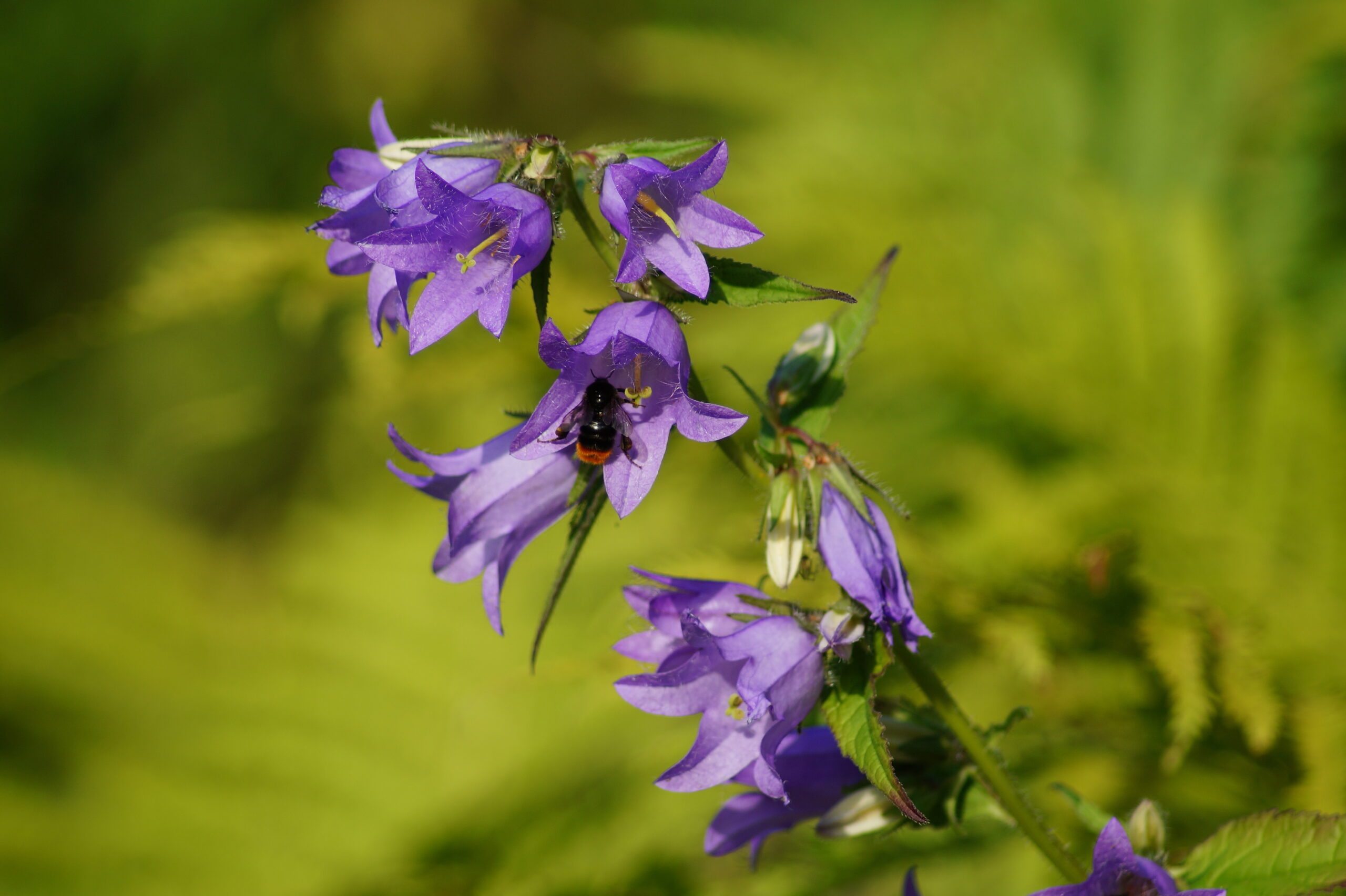
Nettle Leaved Bellflower
Known as the blue foxglove. A stately woodland plant or garden border specimen. The alternate name throatwort is derived from an old belief that C. trachelium is a cure for sore throat, and the species name trachelium refers to its use as treatment of the throat in folk medicine. Other folk names include Our Lady’s Bells because the color blue was identified with the Virgin Mary’s scarf, veil, or shawl; Coventry Bells because C. trachelium was especially common in fields around Coventry; and “Bats-in-the-Belfry” or in the singular “Bat-in-the-Belfry”, because the stamens inside the flower were like bats hanging in the bell of a church steeple.
Dandelion
A golden blaze in the May meadows and banks. Basal rosettes of leaves deeply lobed or toothed (dent de lion), flowers are composed of bright yellow ray – florets. This plant can be found growing in temperate regions of the world, in lawns, on roadsides, on disturbed banks and shores of water ways, and other areas with moist soils. T. officinale is considered a weed, especially in lawns and along roadsides, but not by us! It is sometimes used as a medical herb and in food preparation the flowers are used to make dandelion wine, the greens are used in salads, the roots have been used to make a coffee substitute (when baked and ground into powder). Common dandelion is well known for its yellow flower heads that turn into round balls of silver tufted fruits that disperse in the wind. These balls are called “blowballs” or “clocks. It is food for the caterpillars of several Lepidoptera (butterflies and moths), Even though dandelion pollen is of poor nutritional quality for honey bees, they readily consume it., The roots can be used to make a brown dye and the flowers can make a yellow or green dye.
Lesser Knapweed
Common, Black or Lesser Knapweed, Thistle-like purple flowers, looks good with ox-eye daisies.
Stinging Nettle
Food for many butterfly larvae. Must be fresh leaves, keep cutting throughout the summer.
Stinging Nettle 'Urtica dioica' - Wild Your Garden
Greater Knapweed
A lovely plant with large, raggy, purple flowers, looks good with scabious, ox-eye daisy and musk mallow.
PEAT FREE Greater Knapweed 'Centaurea scabiosa' Super Plugs & 9cm Pots - Wild Your Garden
<strong><strong>IMPORTANT NOTE:</strong></strong> If you are ordering perennials between the months of <strong><strong>October and March</strong></strong>, including aquatic plants, please be aware that this is the dormant phase for perennials, so your plants may arrive showing potentially little or no top growth at this stage, or can in some cases still have some old leaves from last year showing also. Please don't worry, as this is all quite normal. Once the weather warms up in spring, you will start to see fresh growth and activity! If you ever have any concerns at all, please just message the team on [email protected] and we'll always do our best to help.<p>
Additional information
| Pack Size | Pack of 10 x 9cm Pots, Pack of 3 x 9cm Pots, Pack of 5 x 9cm Pots |
|---|
You May Also Like


Subscribe to our mailing list
Enter your email address to sign up to our newsletter and receive our latest offers and new releases!
© 2023 Wild Your Garden Ltd. All Rights Reserved. Registered in England and Wales. Company No. 12995106.
Opening Hours
Customer Service Team available:
Monday – Friday – 09:30-16:30
Saturday & Sunday – Closed
Bank Holidays – Closed
Our Christmas opening hours are normal opening times on all dates except Bank Holidays when we will be closed.